I Studied Japanese for Three Years. Then a Waiter Asked Me One Simple Question — and I Froze.
What happened in that little Osaka restaurant made me realize my brain had been running the wrong "language program" the entire time. Here is the fix I wish someone had handed me on day one.

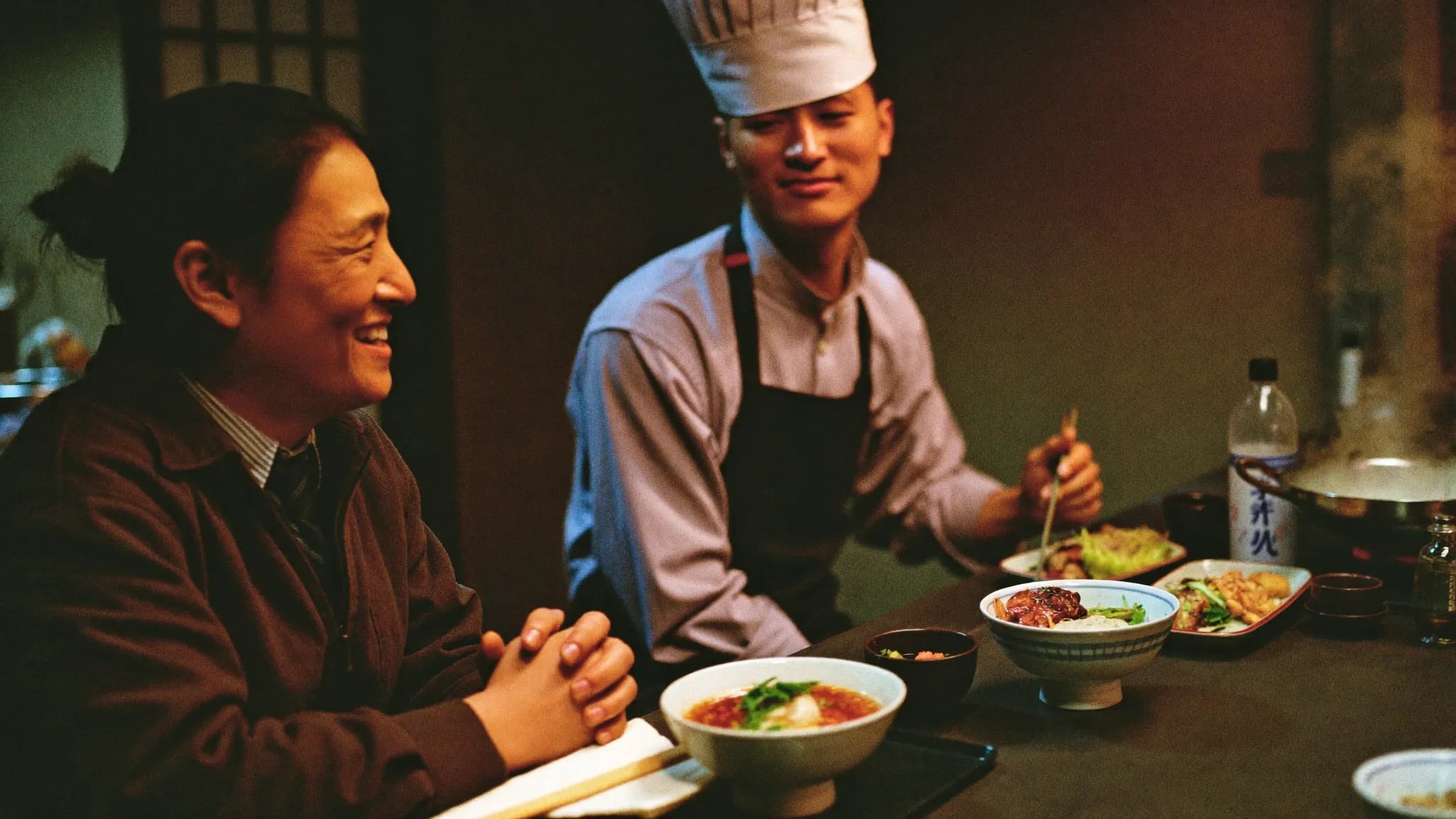
It was a small restaurant in Osaka. It was raining outside.
I'd been studying Japanese for three years. Every single day. Apps in the morning. Flashcards on the subway. A notebook fat with kanji.
I was ready. Or so I thought.
The waiter walks over. Smiles. Asks me a question. A really simple one.
And me… nothing.
My heart speeds up. The words I knew — and I knew plenty — just wouldn't come.
Then the worst part. Three seconds later, I got it. The sentence was easy. I knew it. But by then the waiter had already walked away.
I went back to my table with a question that haunted me for months: if I knew the words… why hadn't I understood them in time?
"Maybe I'm Just Not Cut Out for This"
That thought stuck with me for weeks. Maybe I started too late. Maybe my memory's bad. Maybe Japanese is just too hard for me.
If you're reading this, you probably know that exact feeling. You know the words. You've studied them. You recognize them on the page. But the second someone actually speaks — everything freezes. You understand the sentence only afterward. When it's already too late.
And every time, that little voice comes back: "maybe the problem is me."
I want to tell you something before we go further. It isn't. The problem was never you. It never was.
The Two "Programs" Your Brain Runs to Understand a Language
I spent months looking for an answer, and eventually fell down a rabbit hole of research on how bilingual brains actually process speech. An explanation from a cognitive scientist I'll call Dr. Elena Marsh, who has spent years studying second-language acquisition, finally made it click.
Your brain doesn't have one way of processing a language. It has two.
The first, call it Study Mode. The rules. The vocab lists. The grammar drills. It's slow, conscious, and exhausting.
The second is Recognition Mode. You hear a sentence and the meaning just… arrives. On its own. Effortlessly. It's the system you use every second of every day in your native language. You don't translate English. You just understand it.
Here's the uncomfortable part: almost every course on the planet trains only the first system. Study, memorize, repeat. But native speakers almost never use Study Mode when they talk. They use Recognition Mode. So why does nobody train it? Because Study Mode is easy to sell — points, streaks, levels, a fat book. Recognition Mode doesn't fit on a leaderboard, so the industry quietly skips it.
Do This Right Now. Watch What Your Brain Actually Does.
I want to show you, not explain it. Read this in English:
Did you get it? Instantly. Zero effort. The meaning was already there. That was Recognition Mode. Now read this:
If you're studying Japanese, watch what happens inside your head:
- Step 1 — you take in the sounds.
- Step 2 — you translate, piece by piece.
- Step 3 — you try to recall what each fragment means.
- Step 4 — you reassemble it into an order that makes sense.
- Step 5 — you finally understand.
Five steps. In your own language: zero. Now picture doing that while a real person is talking to you, at real speed. By the time you hit Step 5, the conversation is three sentences ahead.
That's the bottleneck. Not your memory. Not your age. Not talent. The route is just too long. And you just felt, firsthand, the exact wall you slam into every time. So the only question left is: can that route be shortened?
Why Duolingo, Textbooks and Flashcards Left You Halfway There
Let me be fair. Duolingo isn't a scam. Textbooks aren't useless. Flashcards work — for what they're built to do. The problem isn't that they're wrong. It's that they all train the same thing: Study Mode.
They fill you with words, rules, points to collect. They build an enormous warehouse inside your head. But they never teach you to pull things off the shelf at the speed of a conversation.
It's like learning to swim by sitting on the edge of the pool studying arm movements. You get very good at explaining the stroke — and you drown on your first dive.

The Thing I'd Been Looking For Finally Had a Name
Once I understood all this, I went looking for a method built on Recognition Mode. It didn't exist. Everyone started with grammar. Everyone put translation at the center.
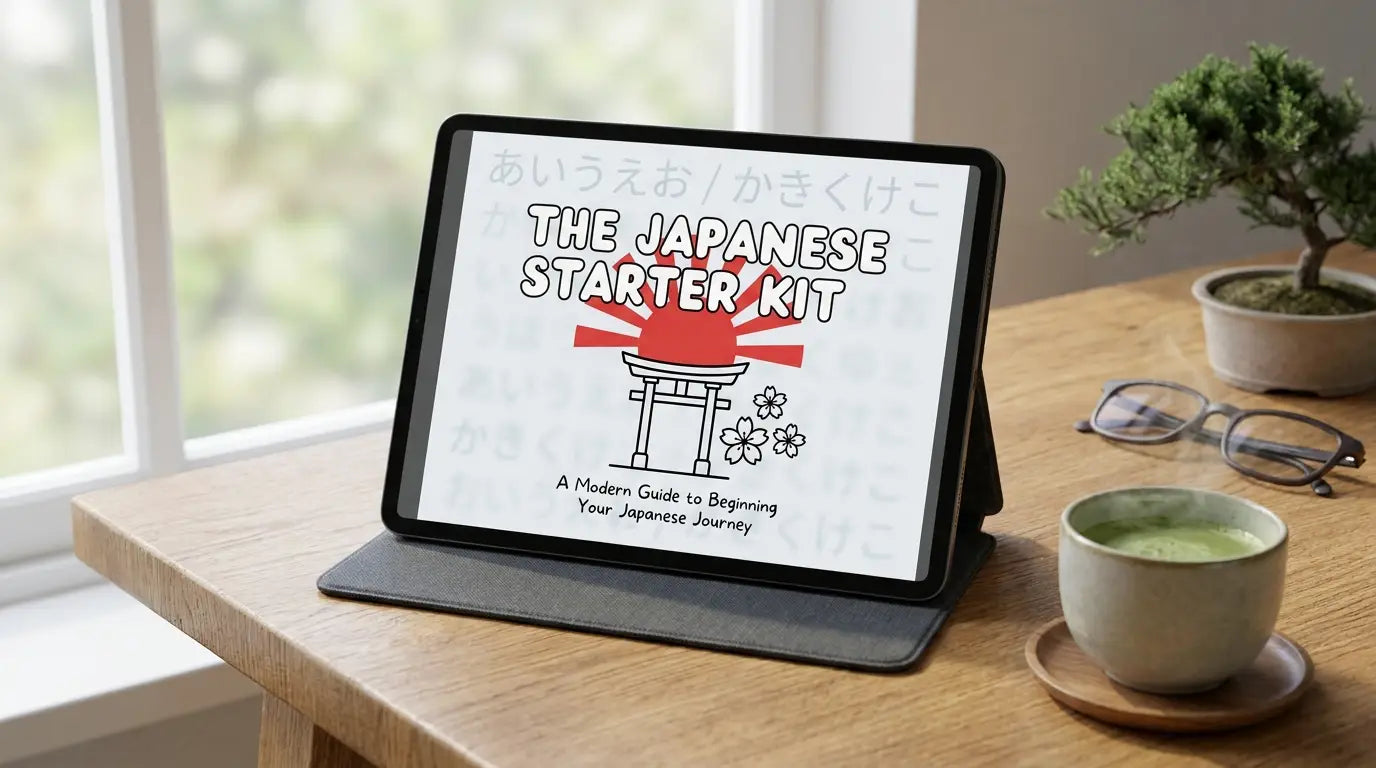
Then a language-teacher friend forwarded me a link — a small digital guide a few of her adult students were quietly obsessed with. It was called The Japanese Starter Kit, built around something its creators named the Japanese Thinking Framework™.
I'll be honest: I was skeptical. I'd already "tried everything." The last thing I wanted was one more miracle method promising fluency in a weekend. But this one didn't promise to help me memorize more. It promised to remove the step that kept freezing me — the translating. And that… I'd never heard anyone say before. So I bought it. It was under ten dollars. If it was junk, I'd lost the price of a coffee.
How It Works (The Exact Opposite of What You've Always Done)
Almost every course runs in this order: grammar → words → (someday, maybe) conversation. The Japanese Thinking Framework™ flips it on its head:
- Recognition — first you train your ear and eye to catch whole blocks of meaning.
- Pattern — you start seeing the recurring patterns instead of isolated words.
- Comprehension — meaning begins arriving before conscious thought.
- Conversation — you speak using those blocks, not sentences built from scratch every time.
- Grammar — it comes last, as an explanation of what already feels right.
You don't learn the rules so you can use them. You use the language, and the rules become obvious. Exactly the way it happened with your first language — you spoke English for years before you ever knew what a past participle was.
What's Actually Inside
- Recognition Training modules — short daily reps that teach your brain to grab meaning without translating.
- Pattern Listening sessions — guided audio that locks in the handful of patterns native speakers reuse constantly.
- Direct comprehension drills — hear → understand, with the translation step deliberately removed.
- The Conversational Block Library — ready-made building blocks so you respond at real speed instead of composing from zero.
- "Reverse" grammar — the rules, finally, explained after they already feel natural.
- The complete beginner on-ramp — hiragana, katakana and your first survival phrases, so total beginners start from page one.
Plus two bonuses: a printable 90-Day Recognition Tracker, and a Shadowing Starter Pack to train your accent alongside your ear. It's an instant digital download. Works on any device. Yours to keep forever.
UPDATE — 6 Weeks Later
I told myself I'd give it two weeks. I'm writing this at six. Last night I watched an episode of anime and realized, halfway through, that I'd stopped reading the subtitles. I wasn't translating. I was just… following it.

It's not magic. My Japanese is still a beginner's Japanese. But the freeze — that three-second lag that cost me the waiter in Osaka — is shrinking. For the first time in three years, every session feels like it's moving me forward.
Not "a Great Course." Something Else.
The people who go through this don't talk about the course. They talk about a new feeling.
"For the first time, I stopped translating. I just… understood. I actually teared up."
— Hannah P., 34, Austin, TX
"I caught myself understanding the sentence before I even thought about it. That's never happened to me in a classroom."
— Daniel K., 41, Manchester, UK
"Conversations stopped feeling like a puzzle I had to solve fast. Osaka in spring is going to be a completely different trip."
— Priya S., 29, Toronto, CA
Over 40,000 beginners have now started training their Recognition Mode with it.
"Yeah, But…"
"I'm too old." Recognition Mode doesn't depend on age. Kids don't have better memory than you — they just trained the right system.
"I don't have time." Study Mode demands hours of memorization. Recognition Mode is trained in short sessions. You need less time, not more.
"I've already tried everything." You've tried lots of versions of the same thing — Study Mode. This isn't one more attempt. It's your first attempt on a different track.
"My memory's bad." Recognition Mode doesn't ask you to remember. It asks you to recognize. You recognize a thousand faces without ever "memorizing" them.
"I'm just not good at languages." You already speak one language perfectly. You pulled that off as a kid using Recognition Mode. It's not talent. It's the method.
The problem was never Japanese.
It wasn't your memory, your age, or your talent. It was the system they had you training. The Japanese Thinking Framework™ exists to train the other one.
Launch price · instant download · yours to keep forever. Backed by the 30-Day "Stop Translating" Guarantee — use it for a month, and if you don't feel the difference in the way you hear Japanese, email us and get every penny back.
No countdowns. No pressure. If you recognized yourself in this story, you already know whether it's for you. You're not buying a course — you're finally learning the way your brain was meant to be trained from the very beginning.
This article is an advertorial. It reflects one learner's experience and is provided for general educational purposes; it makes no guarantee of any specific result, and language-learning outcomes depend on individual effort and consistency. Testimonials are illustrative. "The Language Letter" and the narrator are editorial devices.